
Every product you sell is the visible end of a supply chain you cannot see. Somewhere behind it sits a factory, a trading company, a freight forwarder, a customs broker and a quality inspector — and the strength of that invisible chain decides whether your customers come back or your reviews turn hostile.
Most first-time importers lose money in the same three places. They buy from the wrong kind of company. They negotiate a price before verifying capability. And they release the full balance before anyone has looked at the goods. None of those mistakes require bad luck. They require a process.
This guide is that process. It is written for buyers placing a first order and for buyers who have been burned once and want a system that does not depend on hope. Work through it in order: each step narrows the field before the next one costs you money.
- 01Write a specification before you search. Suppliers cannot quote what you have not defined.
- 02Confirm whether you are talking to a manufacturer, a trader, or an agent — the answer changes everything.
- 03Verify the legal entity, address, certifications and references before you discuss price.
- 04Never pay the balance before an inspection. Make that sequence a contract term, not a promise.
Start with a specification, not a search box
Before you open a marketplace or type a product name into a search bar, write a one-page specification. This is the document every later decision depends on, and it is the difference between comparable quotes and a month of confusing email.
What the page must contain
- Product name and intended use, in plain language.
- Materials, finishes and tolerances — including what is acceptable and what is not.
- Dimensions, weight and pack size.
- Performance requirements: load, voltage, lifespan, test standards.
- Packaging: retail-ready or bulk, barcoded, polybagged, pallet configuration.
- Certifications you require for the destination market.
- First-order quantity and a realistic annual forecast.
- Destination country, port and preferred Incoterm.
That last line matters more than most buyers realise. Destination changes everything downstream: certification, labelling law, duty rates and the Incoterm a supplier can realistically quote. A US-bound electrical item and an EU-bound one are different projects, even when the product is identical.
A written specification also protects you commercially. When a shipment arrives wrong, the argument stops being about taste. It becomes a short, factual question: do the goods match the document we both signed?
Know who is actually behind the email
There are three kinds of companies quoting you, and they behave very differently once money is on the table.
- Manufacturer. Owns the production line, controls tooling, best price at volume. Usually slower to change, least flexible on small orders, and most valuable long term.
- Trading company. Sources from several factories, moves quickly, handles export paperwork well — but marks up the price and may not control what happens on the floor.
- Sourcing agent. Works for a fee between you and the factory. Genuinely useful when you lack language or presence in the region, and only as good as their incentives are aligned.
None of these is wrong. The mistake is not knowing which one you are dealing with, because the questions, the price expectations and the quality controls all change. A trader quoting a factory price is either cutting corners or about to disappear. A factory pretending to be a one-stop shop may subcontract your order to a competitor down the road.
Ask directly, then ask again: “Do you own the production line that makes this, or do you source it?” Check the answer against the business licence, the factory address and the product list. A company that manufactures industrial pumps, garden furniture and phone cases is almost certainly a trader — and that is fine, as long as you know.
Where reliable suppliers actually are
No single directory contains all the good suppliers and excludes all the bad ones. Serious buyers work several channels at once and compare the results.
B2B marketplaces
Global platforms, Eworldgoods included, let suppliers publish offers and buyers publish requirements. The strength is breadth and speed: hundreds of offers in an afternoon. The weakness is that listings are self-published, so verification sits with you. Use the marketplace to build a long list, then run the checks in the next section.
Trade shows
Canton Fair, Ambiente, Hannover Messe and the regional shows around them put the product and the people in the same room. You can compare twenty suppliers in a day and read a room in a way email never allows. The cost is calendar time and travel.
Associations, certifiers and referrals
Category associations publish member directories that carry at least some scrutiny. Certification bodies list the companies they have actually audited. And the highest-conversion channel in most sourcing operations — the most underused one — is a referral from someone who is not your competitor: your freight forwarder, your customs broker, a buyer in an adjacent category.
Build a long list of fifteen to twenty candidates. Do not negotiate with any of them yet. The next step is designed to remove most of them cheaply.
The verification pass: five checks before you talk price
This pass costs an evening and removes the majority of your risk. Do it before a single price is discussed, because a good price from an unverified company is not a price — it is a hypothesis.
- Legal identity. Ask for the full registered company name and business licence number. Search that name in the national registry — China’s National Enterprise Credit Information Publicity System, India’s MCA, Turkey’s trade registry. Confirm the legal name, registration date, registered capital and business scope match what you were told.
- Address reality. Cross-check the factory address against the licence, the website and a map. A residential unit or a shared office tower is not a factory. If the address is a trading hub rather than an industrial zone, ask why.
- Product fit. Look at how long they have made this specific product. A twenty-year-old company that started your category last year has no track record in it, whatever the brochure says.
- Certifications, verified. Ask for the certificate number and issuing body, then check it on the issuer’s own database. A PDF with a logo is not a certificate. ISO 9001, CE, RoHS and FDA registrations can all be confirmed independently.
- References. Ask for two or three buyers in your region or a comparable market, and actually contact them. A supplier with years of exporting and not one reference is telling you something.
Only companies that survive all five are worth a video call. Only companies that survive the video call are worth a sample order. The video call itself is a test: ask them to walk the line, not the showroom.
The RFQ that gets real answers
Most requests for quotation are one line long: “Please send your best price for 500 units.” They get a number back, and the number is meaningless because nothing behind it was defined. A serious RFQ is a short document, sent identically to every candidate.
Include the specification, quantity, destination, required certification and target ship date. Attach a drawing or photo if you have one. Ask for pricing at two volumes — say 500 and 2,000 units — so you can see how their cost structure behaves. Then ask the questions that expose capability rather than enthusiasm.
- What is the lead time for a repeat order, not just the first one?
- Which components are subcontracted, and to whom?
- What is your monthly capacity for this line?
- What is your defect rate, and how is it measured?
- What is your MOQ, and what changes if we accept your packaging?
- Can you send a short video of the line producing a similar order?
Put every reply into one comparison table: unit price, MOQ, lead time, payment terms, Incoterm, included certifications, tooling cost and sample cost. The cheapest unit price is frequently the most expensive total. A quote that quietly excludes tooling, testing or packaging is not a lower price — it is an incomplete one.
Samples are the cheapest insurance you will buy
Never place a production order from a photograph. Order a sample, pay for it, and treat the sample as a test of the supplier as much as of the product.
Check dimensional accuracy against your spec, material and finish, function under real use, packaging as it will arrive, and labelling and barcodes. Then do the part most buyers skip: sign and date the approved sample, keep one copy and send one back. That golden sample becomes the reference for the production run and the standard for any inspection. Without it, “the goods are fine” is an opinion.
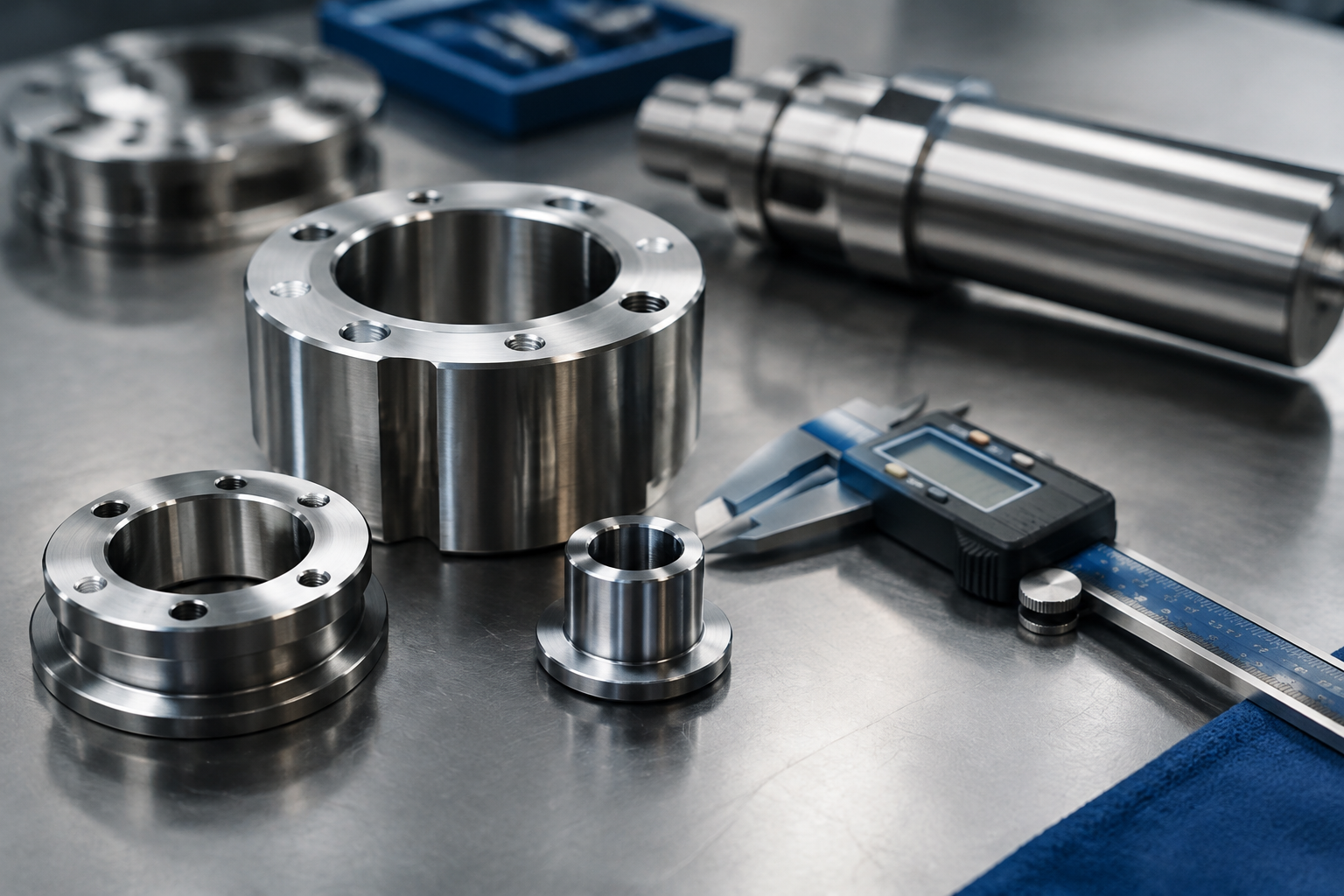
Watch the process around the sample too. How long did it take? Did it arrive with the right paperwork? Was the packaging correct? Did the supplier follow your spec, or quietly improve it without asking? Small signals predict production behaviour with uncomfortable accuracy.
Payment terms, Incoterms and protecting your cash
Payment structure is where first-time importers carry their largest uninsured risk. The default ask from many suppliers is 100% before shipment. The default answer should be no.
Structures that work
- 30/70 — deposit on order, balance against a passed inspection and a copy of the shipping documents.
- Letter of credit for larger orders, where the bank pays against documents rather than promises.
- Escrow or platform-mediated payment where the marketplace offers it, keeping funds conditional on delivery.
- Milestone payments on tooled orders: deposit, tooling sign-off, production start, pre-shipment.
Never wire funds to a personal account, and never to an account in a different company name than the contract. Account-change emails are the single most common fraud in international trade. Confirm any banking change by phone, using a number you already had.
Incoterms, in one paragraph
EXW means you carry everything from the factory gate. FOB means the supplier delivers to the port and clears export, and you take over from there — the most common and most transparent choice for a first order. CIF means the supplier arranges freight and insurance to your port, which is convenient but hides cost and reduces your control. DDP means the supplier handles everything to your door: useful for small parcels, dangerous for large ones if the goods are undervalued to reduce duty. Choose deliberately, and write the term into the contract rather than leaving it in an email.
Inspection before the container leaves
The cheapest defect is the one that never ships. Book a pre-shipment inspection with a third party — SGS, Bureau Veritas, QIMA, Intertek or a reputable local firm — once production is finished and packed, and before the balance is released.
- A statistical check of quantity and function against your spec and golden sample.
- Packaging, labelling and carton-mark verification.
- Photographic evidence of the actual goods, not the sample.
- A report you can send to the supplier before money moves.

Make the sequence explicit in the contract: production complete, inspection passed, balance released, shipment booked. An inspection after you have paid is a complaint, not a control. For repeat orders, keep inspecting — suppliers optimise for whatever is being measured, and a first-order inspection is not a permanent guarantee.
Red flags that justify walking away
Most bad suppliers announce themselves early. The signals repeat across categories and countries, and they are worth memorising.
- Prices far below every other quote, explained only by “we are the factory”.
- Reluctance to give a registered company name, licence number or factory address.
- Refusal to allow a third-party inspection — or a sudden “inspection not convenient” after agreement.
- Pressure to pay in full, quickly, to a personal or third-party account.
- Vague answers about capacity, subcontracting or defect rates.
- Certificates, licences or references that cannot be verified anywhere.
- Instant, detailed quotes on a complex custom product, minutes after your first email.
One flag is a question. Two flags are a decision. The cost of walking away is a delayed launch; the cost of ignoring them is usually the whole order, plus the freight, plus the customers you disappoint while you argue about it.
Build a relationship, and a backup
A verified supplier is an asset, not a transaction. Once you have one, invest in it: pay on time, give accurate forecasts, visit if you can, and tell them what your customers complain about. Suppliers prioritise buyers who are predictable and honest, and that priority shows up in lead times when everyone else is waiting.
Then do the thing most buyers never do — qualify a second supplier in the same category before you need one. Not to squeeze the first on price, but to survive a capacity crunch, a certification problem or a sudden closure. Dual-sourcing costs a little attention and buys continuity.
That is the whole method. Define the product, identify who you are actually dealing with, verify before you negotiate, compare complete quotes, approve a sample, protect the payment, inspect before shipment, and keep two options alive. None of it is glamorous. All of it compounds — into lower defect rates, shorter lead times and a supply chain you can grow on.
The 12-point supplier checklist
Print this, or keep it open while you work through candidates. A supplier who clears all twelve is worth a first order. A supplier who dodges three is worth a polite goodbye.
-
01
Registered legal name
Confirmed in the national company registry, not just on a website.
-
02
Business scope
The licence actually covers the product you are buying.
-
03
Factory address
Industrial location, consistent across licence, site and map.
-
04
Manufacturer or trader
Declared clearly, and consistent with their product range.
-
05
Certifications
Numbers verified on the issuing body’s own database.
-
06
Two reachable references
Buyers who answer a message and describe the same company.
-
07
Live video walkthrough
The production line, not a showroom or a slideshow.
-
08
Written quotation
Unit price, MOQ, lead time, Incoterm and exclusions, all in one place.
-
09
Signed golden sample
Dated, retained by both sides, referenced in the contract.
-
10
Payment schedule
Deposit and balance tied to inspection and documents.
-
11
Third-party inspection
Agreed in writing, timed before the balance payment.
-
12
Backup supplier
A second qualified source in the same category, ready if needed.