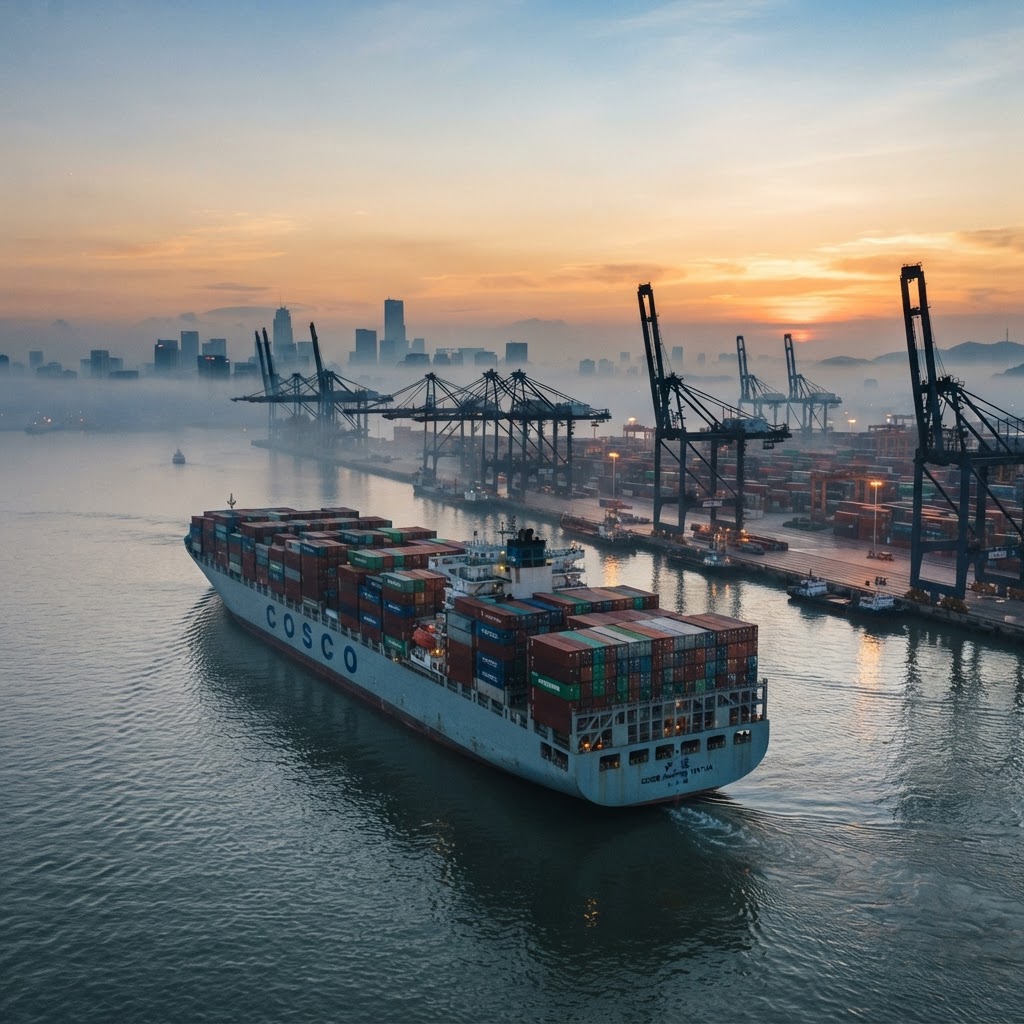
Importing from China is not one decision. It is about forty small ones — a supplier, a specification, a payment method, a freight forwarder, a tariff code — and each one compounds into the next. Get the sequence right and the process is routine. Skip a step and the mistake tends to arrive in a forty-foot container.
This guide walks the full route for a US buyer: what to check before you contact anyone, how to price a product so the margin survives customs, how to pay without exposing your cash, and what actually happens between a factory in Guangdong and a warehouse in Ohio.
It assumes a first or second order, most likely by sea, probably less than a full container. Everything below applies whether you sell on a marketplace, into retail, or direct to consumers.
- 01Start with an HTS code and a landed-cost sheet, not a product photo. Margin disappears at customs, not in the factory.
- 02Budget duty, Section 301 tariffs, freight, insurance, bond and broker fees before you promise anyone a price.
- 03Verify the manufacturer's business licence and confirm US compliance — FCC, FDA, CPSIA, Prop 65 — before production starts.
- 04Pay in milestones tied to inspection, and never wire to an account you have not confirmed by phone.
Before you contact a single factory
Two questions decide whether your import is viable, and both are answered before you look for a supplier: what will this cost to land in the US, and is it legal to sell here?
Find the HTS code first
Every product entering the US is classified under a ten-digit Harmonized Tariff Schedule code. That code sets your duty rate, tells you whether a partner government agency such as the FDA or FCC is involved, and determines whether Section 301 tariffs apply. Ask a customs broker to confirm the classification on your product — usually free — and again once you have a factory quote. Guessing the code is how importers discover an extra 25% after the goods have already sailed.
Check what else applies
- Electrical goods. Anything that emits radio frequency — Wi-Fi, Bluetooth, even a wireless remote — needs FCC equipment authorization before it can be sold.
- Food, cosmetics and medical devices. FDA rules apply, including facility registration and prior notice of imported food.
- Children's products. CPSIA requires third-party testing, a Children's Product Certificate and a permanent tracking label.
- Lithium batteries. Cells are dangerous goods: they change how the shipment can travel and what paperwork is required.
Price it landed, not FOB
A factory quote of $4.20 per unit is not your cost. Your cost is what the unit costs once it is sitting in your warehouse, and the gap between those two numbers is usually 25 to 60 percent.
Build a landed-cost sheet line by line: the FOB or ex-works price, export packaging, inland freight in China, ocean freight, marine insurance, duty at your HTS rate, any Section 301 surcharge, customs bond, broker fee, terminal and port charges, drayage, and your share of an inspection. Then divide the total by the units that will actually sell — not the units you ordered.
Choose the Incoterm deliberately
- EXW. You arrange everything from the factory door. Cheapest on paper, most work, most risk for a beginner.
- FOB. The supplier delivers to the Chinese port and clears export; you control the ocean leg and choose the forwarder. The best default for a first order.
- CIF. The supplier arranges freight and insurance to your port — simple, but you rarely see the real freight cost.
- DDP. The supplier delivers to your door with duty paid. Convenient, but you lose visibility of the declared value — and you remain liable for the accuracy of the entry.
Find the factory and verify it
Marketplaces such as Alibaba, Made-in-China and Global Sources are fine for building a long list, and trade shows like the Canton Fair are better for reading a company quickly. Whichever channel you use, run the same checks before you discuss price.
- Business licence. Ask for the licence and the unified social credit code, then look the company up in China's national enterprise credit system. Confirm the legal name, registered capital, incorporation date, and that the business scope actually covers your product.
- Manufacturer or trader. Ask directly whether they own the production line. A trader is not disqualifying, but the price, lead time and who answers for defects all change.
- Certificates, checked at source. Take the certificate number and search the issuing body's own database. A PDF with a logo proves nothing.
- Capacity and references. Ask for monthly output on your line, who supplies the subcontracted components, and two US buyers you can actually email.
- A live walkthrough. A video call through the production floor — not the showroom — settles most of what a brochure cannot.
Samples, specifications and the golden sample
Order a sample and pay for it. Test it the way your customer will, measure it against your written specification, and check the packaging and labelling exactly as it will arrive in the US.
Then approve it formally: sign it, date it, keep one copy and send one back to the factory. That signed golden sample becomes the reference for mass production and the standard for every inspection that follows. Without it, quality is a matter of opinion.
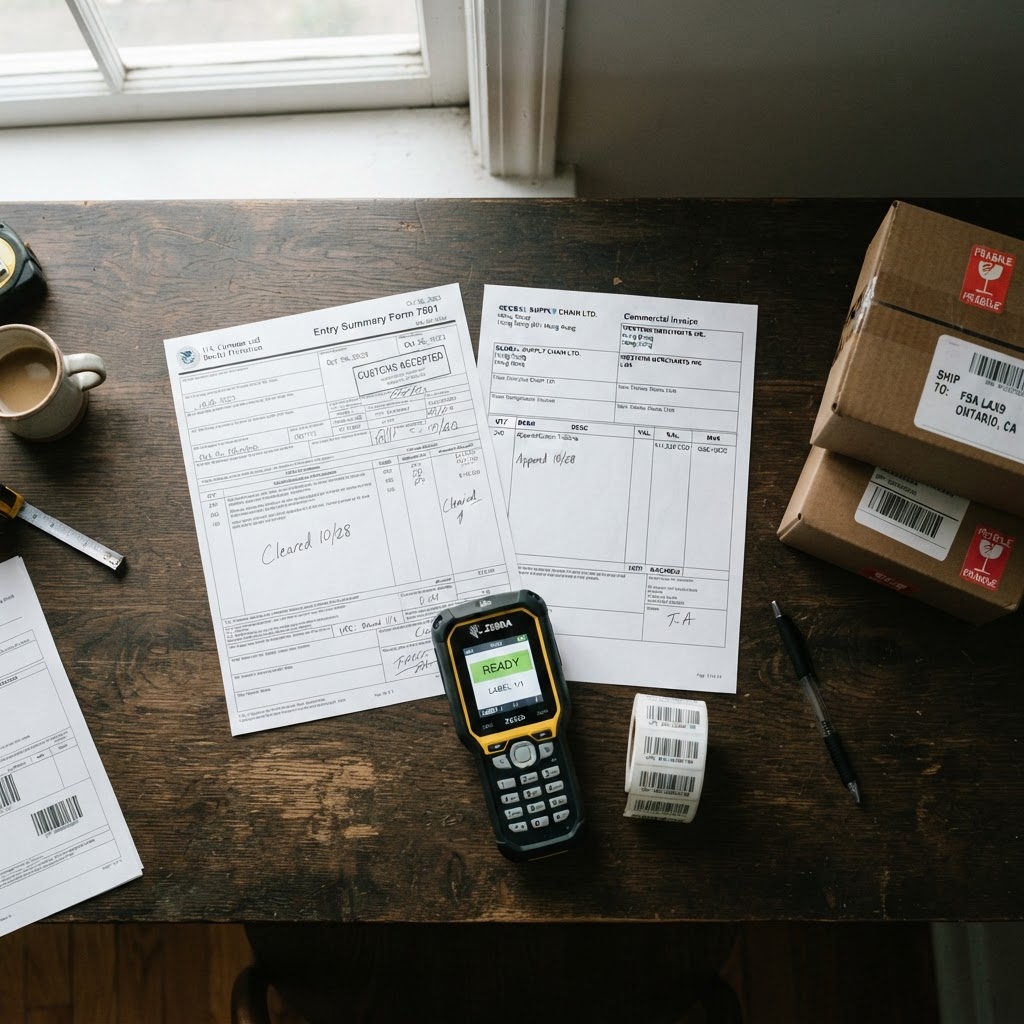
Watch how the sample is handled as closely as the sample itself. Did it arrive on time, with the right labels and the packaging you specified? Did the supplier follow your spec, or quietly substitute a part? Small frictions repeat at container scale.
US compliance and labelling
US market access is where first-time importers get caught, because the factory will rarely raise it for you. Their certificates cover Chinese export requirements; they do not guarantee compliance on the US side.
- FCC equipment authorization for anything that emits radio frequency, with the FCC ID marked on the product and packaging.
- CPSIA testing and a tracking label for anything designed or marketed to children under twelve.
- FDA requirements for food-contact materials, cosmetics and medical devices — food also needs registration and prior notice.
- California Prop 65 warnings where exposure risk exists. A supplier's standard label will not include them.
- Safety listings such as UL, ETL or NSF, which are not always legally mandatory but are frequently required by retailers and marketplaces.
Payment terms that keep your cash safe
The default Chinese quote is 30% deposit and 70% before shipment. That is reasonable — as long as the balance is released against something you control.
- Tie the balance to a passed pre-shipment inspection and a draft bill of lading, not to a promise that the goods will ship.
- Use escrow or Trade Assurance where available, so funds move only when the platform's conditions are met.
- For orders above roughly $30,000, price a letter of credit — the bank pays against documents rather than trust.
- Never wire to a personal account, or to a company name that differs from the contract. Account-change emails from “the boss” are the most common fraud in this trade; confirm any change by phone using a number you already had.
Freight, the forwarder and the ISF clock
Most first orders move by sea. Full-container loads run roughly 30–38 days from South China to Los Angeles and Long Beach, and 35–45 days to New York or Savannah; LCL consolidations add about a week at each end. Air freight takes five to eight days but costs several times more per kilogram.
- Hire a licensed forwarder early. Get their all-in quote including destination charges — a cheap ocean rate paired with expensive terminal handling is a classic.
- File the ISF on time. The Importer Security Filing is due at least 24 hours before the cargo is loaded at the Chinese port. Late filing invites penalties and delays.
- Arrange a customs bond. Single-entry for a test order, continuous once you import more than a couple of times a year.
- Buy marine cargo insurance. It is cheap, and the alternative is absorbing a wet or damaged container out of your own margin.
Customs clearance, duty and the tariff stack
On arrival your broker files an entry, and duty is assessed against the customs value — usually what you actually paid, adjusted for freight and certain assists depending on your Incoterm. The entry summary, CBP Form 7501, follows within ten days.
Three things determine what you pay. Classification, which is the HTS code. Valuation, which is the real transaction price — undervaluing an invoice to reduce duty is fraud, and DDP arrangements that hide the declared value leave the liability with you as importer of record. And the tariff stack: standard duty, Section 301 duties on many Chinese-origin goods, plus successive rounds of additional duties applied since 2018 and again in 2025. Rates for a given code can change with little notice, so check the current rate instead of working from last year's invoice.
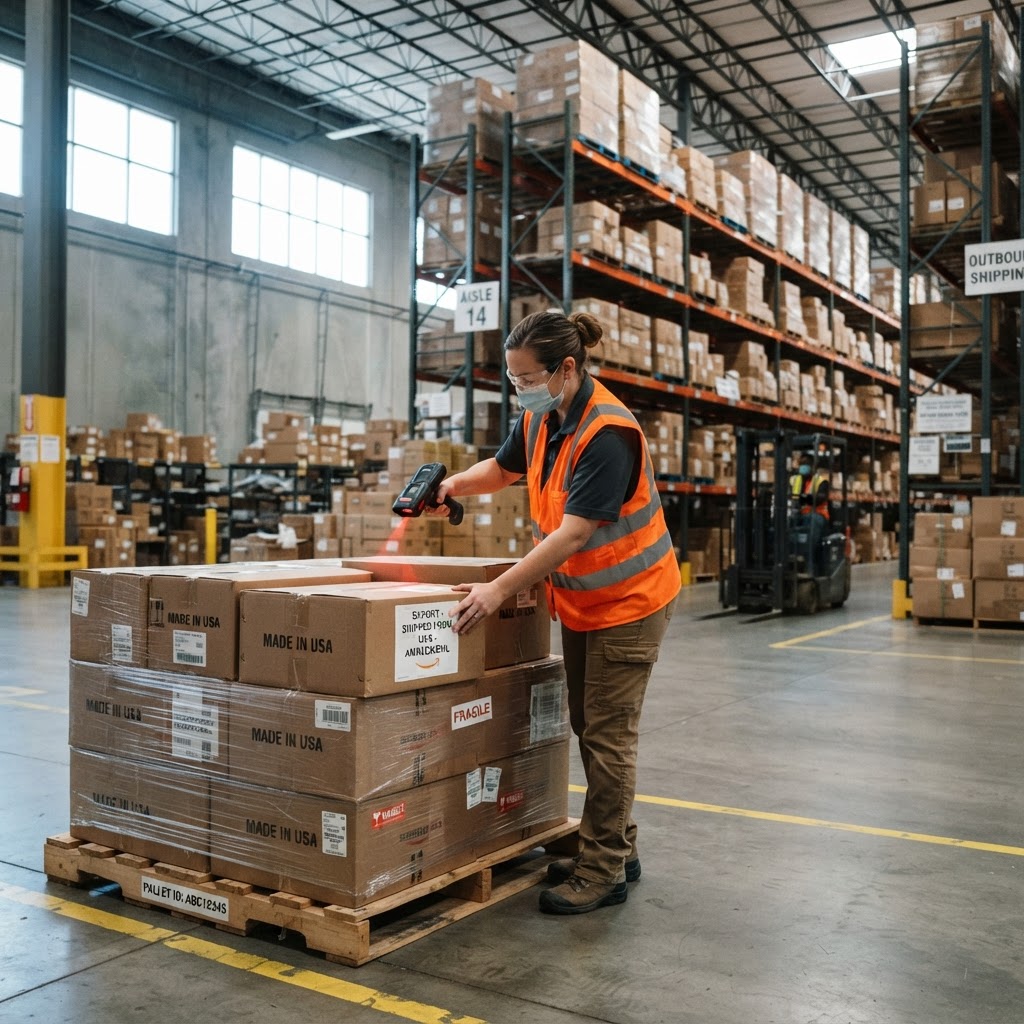
The first-order sequence that works
Put the whole route on a calendar and work backwards from the date you want stock on the shelf.
- Sixteen weeks out: classify the product, build the landed-cost sheet, verify three suppliers.
- Fourteen weeks: compare complete quotes, order samples, specify compliance testing.
- Twelve weeks: approve the golden sample, place the order, pay the deposit.
- Eight weeks: production runs; book freight and inspection; file the ISF when the cargo is booked to load.
- Two weeks: the pre-shipment inspection passes, you release the balance, the vessel departs.
- Arrival: entry filed, duty paid, drayage booked, goods checked against the golden sample.
Expect the plan to slip. What must not slip is the order of operations — inspection before balance, classification before pricing, compliance before production. Importers who hold those three lines run a boring, profitable business. Importers who trade them for speed spend their first quarter negotiating a refund.
The 12-point China import checklist
Keep this open while you work through candidates and quotes. A product that clears all twelve lines is ready for a first order. One that skips three is a course in expensive learning.
-
01
HTS classification
Ten-digit code, duty rate and Section 301 status confirmed by a broker.
-
02
Regulated status
FDA, FCC, CPSIA, USDA or lithium-battery rules identified up front.
-
03
Landed-cost sheet
Duty, freight, insurance, bond, broker and drayage on one page.
-
04
Supplier verified
Legal name and credit code matched on China's national registry.
-
05
Manufacturer confirmed
A factory, not a trader — and the address is an industrial site.
-
06
Certificates checked
Numbers verified on the issuing body's database, never in a PDF.
-
07
Written specification
Materials, tolerances, packaging and labelling all defined.
-
08
Signed golden sample
Dated, retained by both sides, referenced in the order.
-
09
Compliance plan
Testing scheduled before mass production, not after.
-
10
Payment schedule
Deposit and balance tied to inspection and documents.
-
11
Freight and bond ready
Forwarder booked, ISF timing understood, insurance bought.
-
12
Inspection booked
Pre-shipment check timed before the balance is released.